About The Author

Alex Lemieux

Alex Lemieux is a Richmond-based editor with The Republican Standard.

Showing: 171 - 180 of 636 Articles
pelosi

As Opposition To Pelosi Speakership Grows, The Democratic Party Begins To Fracture

Although the moderate Democrat bulwark of less than two dozen lawmakers seems to be an easy hurdle to clear for Minority Leader Nancy Pelosi, who has led the caucus for 16 years, the speaker-to-be needs 218 votes out of the the now 233-strong Democratic majority. Therefore, she can only afford to lose 15, placing the California Democrat’s bid to reclaim the congressional gavel in serious jeopardy.

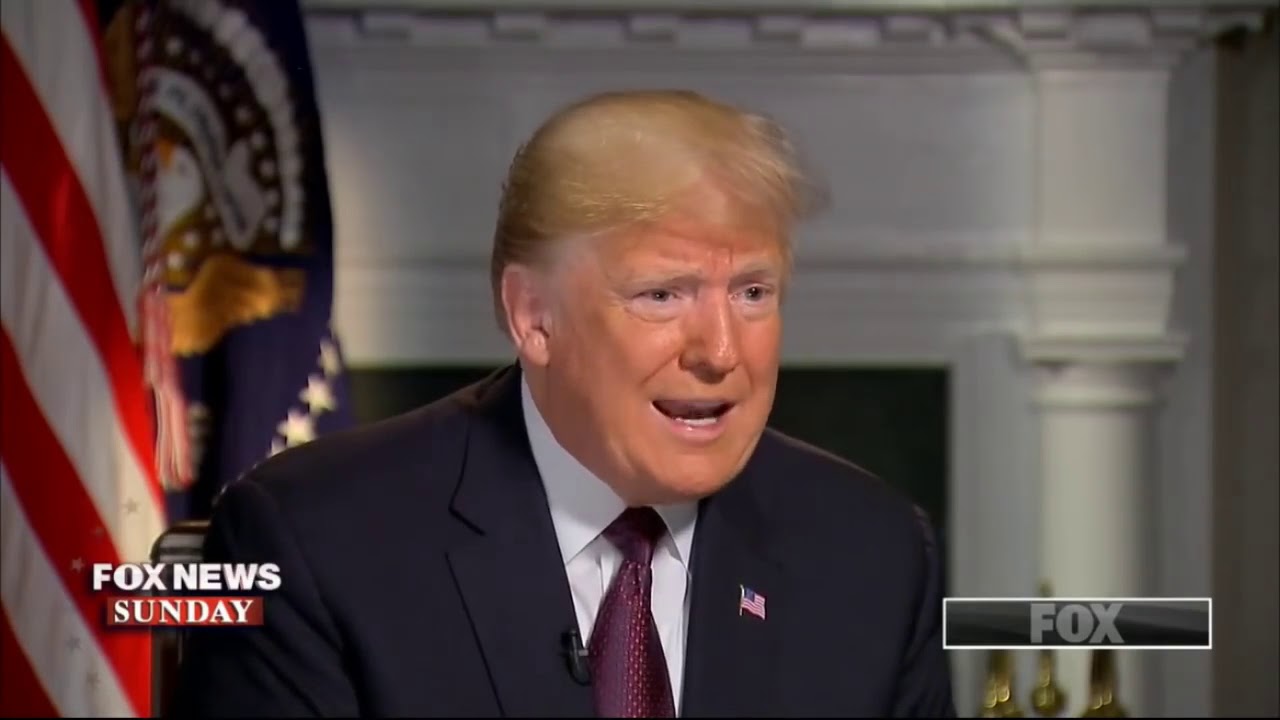
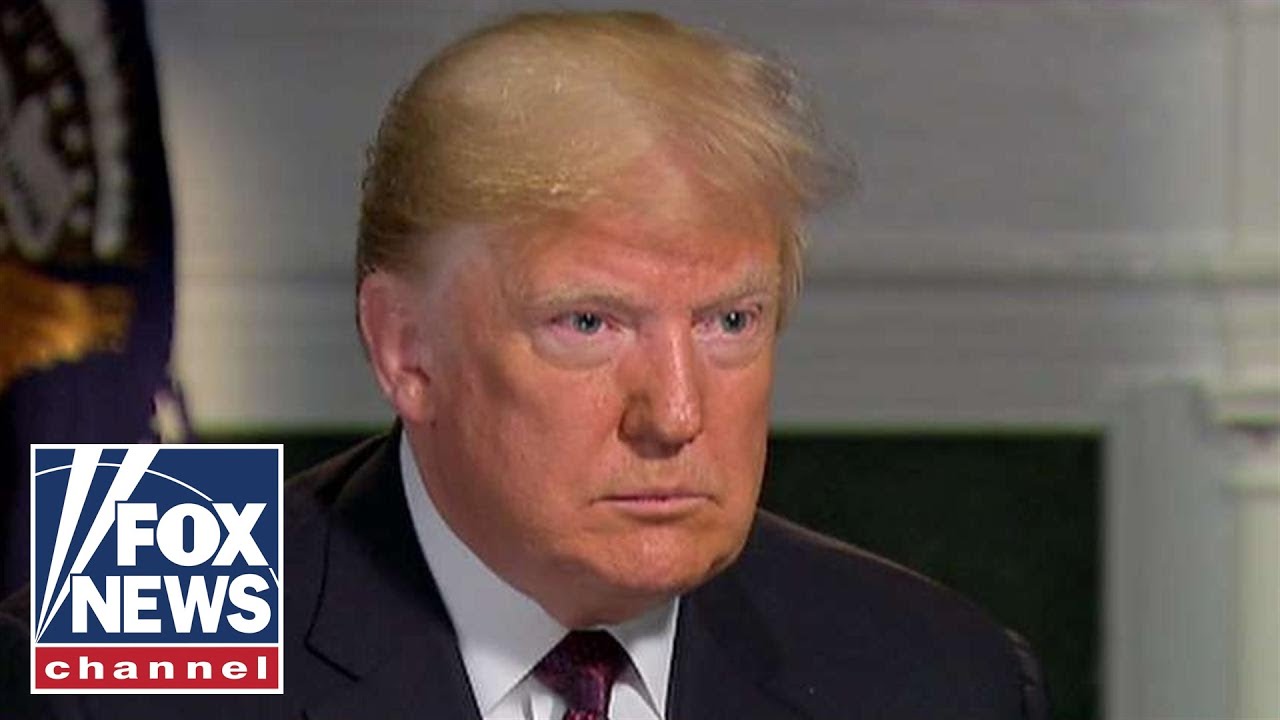
Trump Interview Reveals 3-5 Cabinet Changes Coming, Won’t Interfere In Russia Investigation

During a Sunday exclusive with Fox News hot and journalist Chris Wallace, President Donald Trump said there will be anywhere from three to five Cabinet-level position changes coming soon following Attorney General Jeff Sessions’ forced resignation in the aftermath of the midterm elections. The commander-in-chief is also still unsure of the immediate future of Chief of Staff John Kelly, saying in the interview that, “There are a couple of things where it’s just not his strength. It’s not his fault. It’s not his strength.”

It has been reported that Vice President Mike Pence’s Chief of Staff Nick Ayers could replace the former four-star Marine General as senior aide to President Trump, with some within the administration saying it is a “done deal.” Ayers was one of the architects of Vice President Pence’s tour of vulnerable Republican districts before the midterm elections, including appearances in Virginia.

In the broad spectrum interview, covering topics from the inside of the Trump Administration to immigration, the President said that he was overall content with his White House Cabinet after shakeups over the last 18 months, but remarked that he is currently considering personnel changes in “three or four or five positions.”

Department of Homeland Security (DHS) Secretary Kirstjen Nielsen is thought to be an inevitable departure after Trump’s criticism of her handling issues regarding immigration like the thousands-strong migrant caravan that has since fizzled out in Mexico. As well, Kelly has even threatened President Trump that he would resign if Nielsen is removed from her post. Regardless, Trump’s next pick is likely to be an immigration hawk that will uphold directives from the Oval Office that are in line with the President’s hardline immigration policies and efforts to better enforce border security.

Trump also spoke about the disagreement within the White House last week about clashes between the West Wing and the East Wing with First Lady Melania Trump. Mira Ricardel, a deputy national security adviser who was called to be removed by First Lady Trump after a critical statement, will be staying after the President said she is being moved to a different position in the White House, meanwhile downplaying claims that his wife holds power over the personnel decisions of the Oval Office.

“[The first lady’s team] wanted to go a little bit public because that’s the way they felt and I thought it was fine,” Trump said.

While speaking to Wallace he reiterated that his administration is not the “chaotic” picture the “mainstream media” likes to depict, saying the mood of the West Wing was “very light,” especially after the results of the midterm elections with Democrats taking back the House of Representatives.

Trump championed the two – barring current recounts – Senate seats Republicans picked up on November 7, saying the GOP had a “tremendous set of victories” on Election Day, while Wallace questioned the President about comments he made on the midterms being a “near perfect victory” for Republicans during a previous press conference. President Trump also shook off claims that he said before the election to act like he was “on the ballot,” dismissing his part in the loss of over 35 seats in the House from Republicans.

Following political uproar after former Iowa federal prosecutor and chief of staff to the ousted-AG Matt Whitaker was tapped to replace Sessions as the nation’s top law enforcement officer, Wallace asked the President what he plans to do with White House Special Counsel Robert Mueller‘s investigation into Russian meddling in the 2016 presidential election. Trump said he “would not get involved” if his choice for acting attorney general decided to end the investigation. Whitaker was previously a fierce critic of the probe, with Democrats calling for him to recuse himself and hand the investigation back to Deputy Attorney General Rod Rosenstein.

Trump said that “It’s going to be up to him” and that “I really believe he’s going to do what’s right,” adding the “witch hunt” has gone on far too long. He also shut the door on any chance that he will sit down for an interview with the special counsel before the investigation is wrapped up.

Insofar has his rhetoric is concerned, Wallace asked the President about what he intends to do to quell divisiveness in the media. After Wallace interjected when the President called reporters the “enemy of the people,” Trump suggested that Wallace was no “angel,” and charged back when he said that the media was in “solidarity” against his comments demonizing journalists. Trump exclaimed, “I am calling fake news, fake reporting, is what’s tearing this country apart because people know, people like things that are happening and they’re not hearing about it.”

The comments come days after Federal Judge Timothy Kelly ruled that CNN reporter Jim Acosta would get his press pass back on Fifth Amendment grounds. After tempers were flaring between Trump and Acosta at the White House during a post-midterm election press conference, a fracas between the reporter and a White House staffer ensued, with Trump reprimanding Acosta in the process and suspending his press pass hours later. White House Press Secretary Sarah Huckabee-Sanders said later the Trump Administration would be crafting “rules” for those in the press corps.

The First Step Act Reveals Two Big Areas Of Criminal Justice Reform

President Donald Trump and both houses of Congress are set to pass the most widespread reform to the criminal justice system since then-President Bill Clinton signed the Violent Crime Control and Law Enforcement Act – the Crime Bill – into law, allowing harsher sentencing practices that led to hundreds of thousands of non-violent drug offenders remaining in and sent to prison. Dubbed the First Step Act, it contains several alterations to the way the federal government treats drug offenders, both those who are currently incarcerated and those that may face the system in the future.

If the measure is voted through during the lame-duck session that ends in January, thousands of federal prisoners would have access to more help preparing for life after the end of their sentences, with thousands more well-behaved prisoners being granted their freedom back earlier. Furthermore, those who are arrested for drug crimes in the future would become eligible for exemptions from harsh mandatory minimum sentencing laws.

The House of Representatives and the U.S. Senate have been at odds for months over some specifications of the package, with Senate Majority Leader Mitch McConnell (R-KY) claiming a vote will not come this year. Regardless, the reform bill drew praise even from liberally-partisan CNN commentator Van Jones, who is now taking heat from the political left.

While the federal prison population is approximately one-tenth of America’s total incarcerated population, the federal reforms continue work that is being done at the state level across the U.S. to decrease prison populations while also seeing drastic reductions in crime.

There are two big areas of reform in the possibly-landmark First Step Act.

Back-End Sentencing Reform:

The legislation applies corrections to prisoners who were sentenced for crack-cocaine offenses before the 2010 Fair Sentencing Act was passed, which reduced race-based disparities in punishments given to people convicted of crack cocaine-related offenses – often low-income urban residents – much more harshly than those convicted of powder cocaine-related crimes as was dictated in the 1994 Crime Bill. According to NBC News, there are nearly 3,000 prisoners that would become eligible to petition for their immediate release if the criminal reform package passes and is signed by President Trump.

The U.S. Bureau of Prisons will also be tasked with re-calculating the amount of “good-time credit” for prisoners who stay out of trouble behind bars, adding seven days of credit per year. Applied retroactively, it would mean that an estimated 3,900 prisoners would be eligible to leave prison earlier in the first year the changes take effect.

Federal prisoners would also be given opportunities to participate in training and educational programs by awarding them “points” that accelerate their release to halfway houses or home confinement. Nevertheless, the report states that “the bill exempts several categories of prisoners from earning more credits, including convicted murderers, sex offenders, terrorists and spies, as well as immigrants who crossed into the U.S. illegally and people convicted of trafficking fentanyl.”

Front-End Sentencing Reform:

The First Step Act addresses some aspects of the justice system’s guidelines for how prison sentences are determined. The system under the new law would allow judges to diverge from mandatory minimum sentencing laws, offering lower sentences to non-violent drug offenders. This, as stated by the Congressional Budget Office (CBO), will affect around 2,100 offenders every year.

Restrictions on prosecutors seeking longer sentences by adding gun charges against a drug defendant even if the firearm was not used in a particular incident will also come with the legislation. The CBO claims this point of the reform package would affect only 60 defendants a year, but reduce their potential sentences by around half. A few dozen others would benefit from reducing the mandatory minimum sentences given out to repeat serious drug offenders, including the elimination of life without parole for someone with three or more prior drug offenses, which will applying moving forward following the signing of the law only.

A possible third big area of real reform is in the name of the law itself, “First Step.” That is what this reform package is. It is not overtly-aggressive, nor is it perfect; it is a first step to more reform. The current bill stops short of what many reformers say is needed to curb prison spending, relieve staff shortages, overcrowding, and promote better equality within the justice system.

Nonetheless, it is the beginning of something.

CIA Says Saudi Crown Prince Mohammed Bin Salman Ordered Assassination Of Journalist Jamal Khashoggi

Following last month’s development of American-based Saudi journalist Jamal Khashoggi’s disappearance, the CIA has concluded that Saudi Crown Prince Mohammed bin Salman ordered the assassination in Istanbul, contrary to what the Saudi government has claimed, which originally stated they were not involved in the incident. The most definitive report to come out about the mysterious occurrence may complicate President Donald Trump’s efforts in maintaining a good relationship with a close U.S. ally.

The Sydney Morning Herald reported that the CIA’s conclusions remarked on 15 Saudi agents that flew to Istanbul on government aircraft in October before they met to kill Khashoggi inside the Saudi consulate. The reporter was there to retrieve documentation in order to fulfill his planned marriage to a Turkish woman. Also, Khashoggi resided in Virginia and was a contributor to The Washington Post.

Initial reports after the October 2 assassination include claims that Khashoggi was allegedly “cut into pieces” then moved out of the consulate, with some saying it was recorded to prove the mission had been completed. CIA Director Gina Haspel reportedly listened to an audio recording from a “listening device” the Turkish government had inside the consulate, detailing that Khashoggi was killed within moments of entering, leading to the conclusion of the case. The CIA, however, has been unable to locate the journalist’s remains.

U.S. intelligence officials also obtained communications and discovered, days before Khashoggi’s death, his life was in danger, possibly being lured back to Riyadh to his death. Regardless, the journalist was never a person of interest, and since he was living in Virginia, it shielded him from intelligence gathering, the report stated.

Considering the assassination was a government-sponsored undertaking, Crown Prince Salman, the country’s de facto leader, was named by the CIA as one with a top role in Khashoggi’s killing.

Although this may put a slight damper on the crown prince, he is unlikely to lose his status within the Saudi royal family.

“The CIA sees Mohammed as a ‘good technocrat,’ one U.S. official said, but volatile and arrogant, someone who ‘goes from zero to 60, doesn’t seem to understand that there are some things you can’t do.”

Khashoggi was a prominent critic of the royal family, which posed a potential foreign policy crisis for Crown Prince bin Salman. Many believe it is a retribution killing used to dissuade others in the country from speaking ill of the Saudi government and its dealings.

One theory behind the journalist killing is that Mohammed bin Salman believed Khashoggi was, in fact, an ally of the Muslim Brotherhood. On the domestic sociopolitical front in Saudi Arabia, the crown prince has been working to craft a more religiously-moderate country for the future, battling against Wahhabism, the official state-sponsored religious doctrine for the nation’s leadership. Highly critical of Iran’s 1979 revolution and its attempts to spread sharia law across the Middle East, bin Salman is trying to attract outside investors and make Saudi Arabia a better country to do business with and visit to transform its economy.

Nevertheless, the worldwide coverage of the Khashoggi killing will undoubtedly negatively affect such plans.

This week, the Treasury Department sanctioned 17 individuals that are said to have been involved in Khashoggi’s death, including some key Saudi government officials. Nevertheless, President Trump explains that he would like the crown prince to remain in power because of the geopolitical pressure Saudi Arabia places on neighboring Iran.

Acosta Gets His Pass Back, Rules For Reporting May Be Established After Fifth Amendment Judgement

A federal judge in Washington has ruled that the White House must grant CNN reporter Jim Acosta him his “hard pass” after having it suspended following last week’s incident between himself and President Donald Trump at a post-midterm election press conference. U.S. District Court Judge Timothy Kelly, a Trump appointee, announced his decision Friday morning on Fifth Amendment grounds, with Acosta making an appearance this Friday morning in the press room after the White House said it would “temporarily reinstate” the reporters credentials.

Hours after the Democrats took back the House of Representatives on Election Day, the President and Acosta were at odds over question asked about immigration, specifically the migrant caravan in Mexico heading towards the U.S. Tempers flaring between the two, a White House staffer moved in to take the microphone away from Acosta, Trump walked out from behind the podium and engaged in an exchange with the reporter, causing a small fracas live on television.

President Trump promptly ordered the suspension of Acosta’s White House press pass after the ending the press conference.

CNN filed a First Amendment lawsuit on the grounds that the reporter’s right to the freedom of speech is being violated from having his credentials revoked. Furthermore, they argue that President Trump must publicly declare that the revocation was unconstitutional, seeking a declaration from the judge for that issuance.

Nevertheless, Judge Kelly granted CNN‘s request for a temporary restraining order with relief on Fifth Amendment grounds, stating that the White House violated Acosta’s due process rights when suspending his press pass. Soon thereafter, the Trump Administration announced that there would be forthcoming “rules” to the press corps. The federal judge also said in his ruling that, in the future, the White House could seek to revoke a certain press pass if it provided an individual with due process.

White House Press Secretary Sarah Huckabee-Sanders said this afternoon that the Trump Administration will develop guidelines to ensure equality and order in official press conferences. Trump reiterated later that people must “behave.”

While reporters may not be accustomed to rules with reporting within the White House, or even on 1600 Pennsylvania Avenue, they could, in fact, protect other reporters from retaliation.

Fed Chairman Says Economy ‘In Good Place’ And Pledges Live Central Bank Meetings

Federal Reserve Chairman Jerome Powell said American markets will have to come to terms with rates rising in 2019 as the U.S. central bank works to control inflation. The Fed is expected to raise rates an additional quarter-point before the end of the year, despite having three quarter-point raises earlier this year when forecasts showed gross domestic product (GDP) increases were far above four percent.

Legal Trouble For Virginia AG Mark Herring From Environmental Alliance With Billionaire Bloomberg

After being praised by the NYU School of Law’s State Energy and Environmental Impact Center for his work including fighting the Trump’s Administration’s EPA for their proposal to roll back vehicle emissions standards from the Obama-era, fighting Virginia’s offshore drilling plans, promoting the Clean Power Plan, and pledging to remain committed to the Paris climate accords, Virginia Attorney General Mark Herring is hit with a lawsuit for his alleged efforts and the legality of bringing aboard climate litigators into the state government funded by billionaire Michael Bloomberg to prosecute more Virginia environmental offenses.

Select Committee On School Safety Authorizes Report Outlining Recommendations For 2019 General Assembly Session

“When I formed the Select Committee on School Safety I promised that our final product would be comprehensive and consensus-driven,” said head of the committee Speaker of the House of Delegates Kirk Cox (R-Colonial Heights) following Wednesday’s authorization of a 24-point priority recommendation plan to increase security in schools, which includes realigning the role of school counselors, statewide mental health and suicide prevention efforts, increasing funding for school resource officers, and bolstering school security grants.