While tens of millions of vehicles in the U.S. are under a Takata-branded air bag recall, Delegate Rob Bell is pushing legislation to levy larger penalties on mechanics and others who “knowingly” install defective air bags.

Virginia's Public Square
Virginia's Public Square

While tens of millions of vehicles in the U.S. are under a Takata-branded air bag recall, Delegate Rob Bell is pushing legislation to levy larger penalties on mechanics and others who “knowingly” install defective air bags.
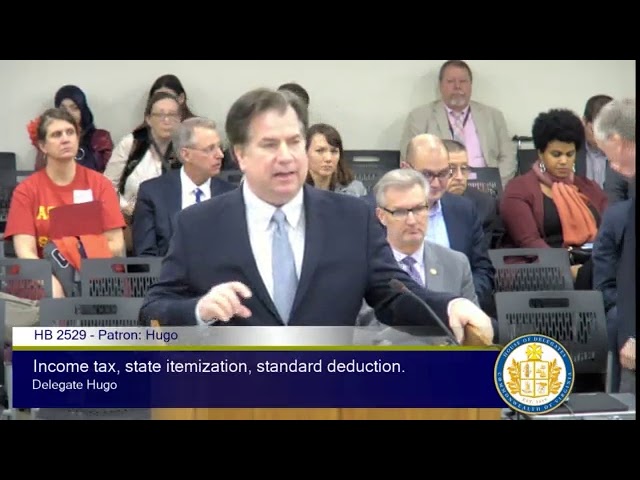
Virginia’s middle class is one step closer to much-awaited tax relief.
This morning, Republicans in the House Finance Committee advanced a package of legislation aimed at easing the tax burden on the middle class, blocking Governor Ralph Northam’s planned tax hike, expanding itemization flexibility, and updating Virginia’s tax code to reflect changes in the 2017 federal tax reform law.
Last year, Governor Northam and his Democratic allies floated a tax increase to pay for his spending plan, announced earlier this year. Under Northam’s plan, state spending would increase by $2.2 billion, with $1.2 billion of that paid for through higher taxes on 600,000 middle class families. $1.6 billion of Northam’s proposed spending increases would occur after his term expires.
Republicans have said Northam’s tax increase is “dead on arrival.”
“Since last summer, we have been united against Governor Ralph Northam’s plan to pass on higher taxes in order to finance new state spending,” said Speaker Kirk Cox (R-Colonial Heights) in a press release.
“The House Finance Committee acted today to set aside all of the individual income tax revenue from the federal tax cuts to ensure that we provide tax relief to those affected by federal and state tax law changes.”
The legislative package would direct $950 million into a taxpayer relief fund providing assistance to those impacted by the changes.
HB2529, patroned by Delegate Tim Hugo (R-Clifton), allows taxpayers to itemize regardless of how they pay their federal taxes, increases the standard deduction from $3000 to $4000 for individuals, and from $6000 to $8000 for married couples. Under this legislation, additional revenues arising from economic growth and other sources would be directed towards the Commonwealth’s Tax Policy Fund, to be used for tax relief beginning in 2020.
Hugo’s bill advanced on a party line vote, with all Republicans voting in favor of tax relief and all Democrats backing Northam’s call for higher taxes.
“We will provide immediate tax relief to middle-class Virginians,” said Hugo, the chairman of the Republican Caucus. “Our plan will allow taxpayers to itemize their state taxes regardless of how they file their federal return, increase the state standard deduction across the board, and maintain the important state and local tax (SALT) deduction as it exists today. This protects a middle class family that itemizes from what could be roughly a $805 tax increase or providing an additional $115 in tax relief to a family that chooses the standard deduction.”
The legislation also leaves in place the current state and local property tax deduction (SALT), instead of capping it at $10,000, includes a number of technical corrections, removes a drafting error on mortgage interest deductions, and includes the “GILTI” subtraction to prevent a new tax on foreign income for businesses who locate in Virginia.
Republicans have said this tax relief would not cost the state “one penny” and would leave ample revenues available to fund teacher pay raises and other core government services.
The proposal would provide an immediate $575 million in tax relief for the next year, while still allowing for revenue growth. Current projections show the GOP-led effort will result in $37 million in more revenue in the next fiscal year.
Also advanced today was HB2355, introduced by Delegate Chris Jones (R-Suffolk), which advances Virginia’s tax conformity to December 31, 2019, while directing $952 million in revenue from the changes towards the taxpayer relief fund for next year. This provision would capture 100% of the limited-time tax relief made available through the Tax Cuts and Jobs Act (TCJA).
“Though we recognize that we must act on conformity, we are committed to providing tax relief to those impacted by the federal tax changes. My legislation puts all individual tax revenues from conformity in a ‘Taxpayer Relief Fund’ to ensure that it is not used for state spending,” said Jones, who chairs the House Appropriations Committee. “The House budget that will be released on Sunday will not spend one dime of the increased individual tax revenues from the Tax Cuts and Jobs Act and I am committed to providing tax relief for middle-class families.”
Finance committee chairman Lee Ware (R-Powhatan) urged the Commonwealth to act quickly, with the filing deadline approaching.
“With tax filing season upon us, it is important that we act quickly to move forward on conformity,” said Delegate Ware. “By setting aside all revenue from federal tax reform, as Chairman Jones’s bill does, we can ensure that the General Assembly has an opportunity to debate clearly what we should do with this money. Our plan would guarantee tax relief, while Governor Northam uses it to finance $2.2 billion in new state spending.”
Republicans have unified behind the plan, making tax relief and opposition to tax increases a priority for the legislative session.
The issue is proving to be a sharp dividing line between Republicans and Democrats as session rolls on. While the GOP has largely focused on the impacts of the bill for taxpayers, Democrats remain committed the governor’s talking points, denying that the additional $1.2 billion in revenue will be paid by the middle class.
Earlier this month, Democratic minority leader Eileen Filler-Corn wrongly stated that Northam’s proposal was not a tax hike.
“We also heard some incorrect information from the delegate from Fairfax, stating that Governor Northam’s proposal was a tax increase,” said Filler-Corn, in a floor speech to the House of Delegates, referencing Hugo’s legislation.
“There is no tax increase in the governor’s budget plan,” she continued.
Editorial boards have disagreed with her characterization, with the Richmond Times-Dispatch writing, “Gov. Northam’s tax plan wallops the middle class.”
Considering the example of a two-teacher married household, the Times-Dispatch noted, “Assuming a net income of about $80,000 for our two young educators, a back-of-the-envelope calculation of their state income tax liability suggests it would balloon by at least $700 under the Northam plan.”
While the future of the plan remains to be seen, as session continues, Republican legislators said they would continue to fight for tax relief and oppose the higher taxes proposed by Governor Northam.
Virginia’s regular legislative session is scheduled to continue through mid-February. GOP lawmakers said they hoped changes to tax policy would be made in time for filing session, however some lawmakers have hinted that a special session may be forthcoming, if legislators are unable to agree on changes before the General Assembly adjourns.

58,000 non-citizens were confirmed to have voted in Texas elections. Virginia Senator Mark Peake (R-Lynchburg) has introduced legislation to verify voter citizenship and prevent a similar problem in the Commonwealth. Peake’s bill has advanced out of committee, with all Republicans in support and all but one Democrat opposed.
Following the Supreme Court’s decision in South Dakota v. Wayfair (2018), Virginia lawmakers are jumping on the opportunity to collect internet sales tax. The bigger question: what will the money be used for?

The one-two legislative strategy by Delegates Scott Garrett and Kathy Byron would prohibit taxpayer funding of abortion providers in this year’s budget and begin working towards prohibiting it in Virginia’s constitution. The move comes as Governor Northam and Democratic lawmakers proposed a sweeping repeal of abortion restrictions, including on late term abortions in the third trimester.
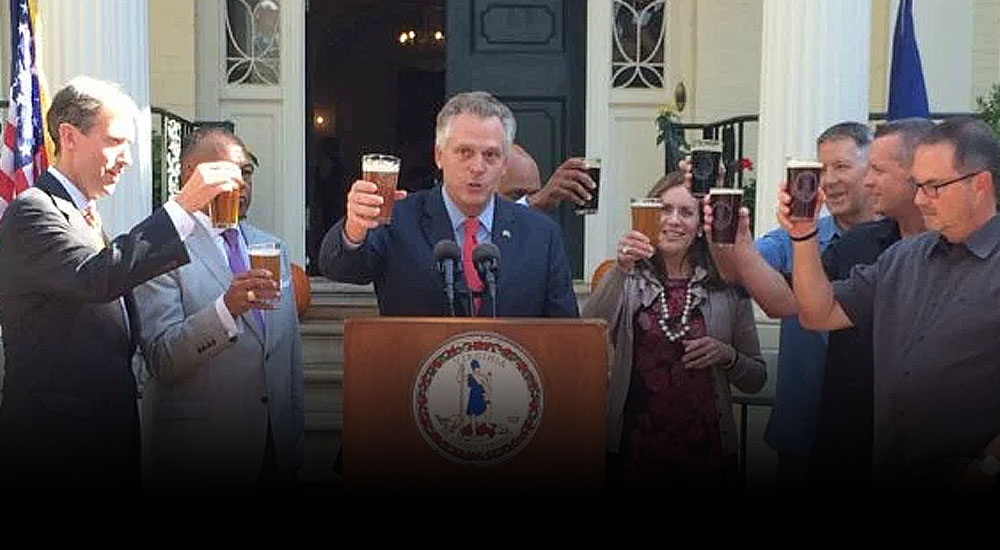
From federal investigations, to wonky deals with Chinese investors, to allegedly seeing the Khashoggi assassination, Terry McAuliffe may have to answer a barrage of odd questions when he officially announces his presidential run.

The legislation would place greater punishments on telephone spammers, adding the practice of spoofing to the Virginia Telephone Privacy Protection Act (VTPPA).
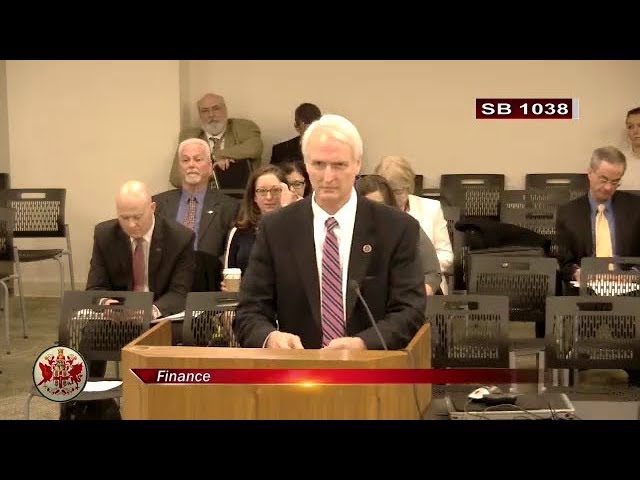
When Senator Mark Peake (R-Lynchburg) first ran for office in 2015, he said Virginia needed more lawmakers focused on solving problems with common sense. This session, he’s fighting for a bill which he says does exactly that.
Peake introduced SB1038 to require voter registrars throughout Virginia to electronically verify the name, date of birth, and social security number of each voter against existing federal databases to confirm that every registered voter is a citizen of Virginia and the United States.
Calling it a “very simple bill” and “very common sense”, Peake urged the committee to pass the measure, which he said would strengthen election integrity in Virginia and help fight voter fraud.
“I just kind of would like to make sure that people who are registered to vote in Virginia are actually Virginia citizens and the people they say they are,” he said.
Peake noted his legislation would cost less than a million dollars, contrasting the fiscal impact of the bill with the much larger sums of money spent every year on campaigns in Virginia.
“We’re talking about less than a million dollars to make sure that people who register to vote in the Commonwealth of Virginia are actually citizens of the Commonwealth of Virginia and are actually the people they say they are. That’s my bill,” Peake added, following a short presentation.
On Wednesday, Peake’s bill advanced out of the Senate’s Finance Committee, following an earlier favorable recommendation by the committee on Privileges and Elections, which handles election-related legislation. The legislation advanced out of Finance on a party line vote, with all Republicans in favor and all Democrats opposed, after passing out of Privileges and Elections with bipartisan support, when Senator Lionel Spruill (D-Chesapeake) broke ranks with his party to support the bill.
During Wednesday’s hearing, no representatives from the Department of Elections came to speak for or against the bill.
Following a short presentation, the committee, with Peake’s blessing, adopted an amendment giving registrars until 2021 to implement the legislation. This amendment, observers said, was necessary to give localities time to implement the electronic verification in their computer systems, as well as move the bill’s modest implementation cost beyond the current budget cycle, a move intended to put the law on the books and protect its passage against the possibility of becoming caught up in a larger budget dispute over Governor Northam’s proposal to increase spending and taxes this year.
While Northam has not indicated whether he would sign the legislation, the governor has shown disdain for other election integrity measures, calling for a repeal of Virginia’s voter ID law in his annual State of the Commonwealth address, in which he also called for higher spending, sweeping gun control, and creating a “fundamental right” to abortion, including late term abortions in the third trimester.
Northam’s opposition comes in spite of public polling showing voter ID measures to be very popular. According to Gallup, four in five Americans support voter ID laws.
Peake’s bill will now be heard by the full Senate, which favored the measure last year. If passed, it would need to gain approval in the House of Delegates before heading to the governor’s desk.
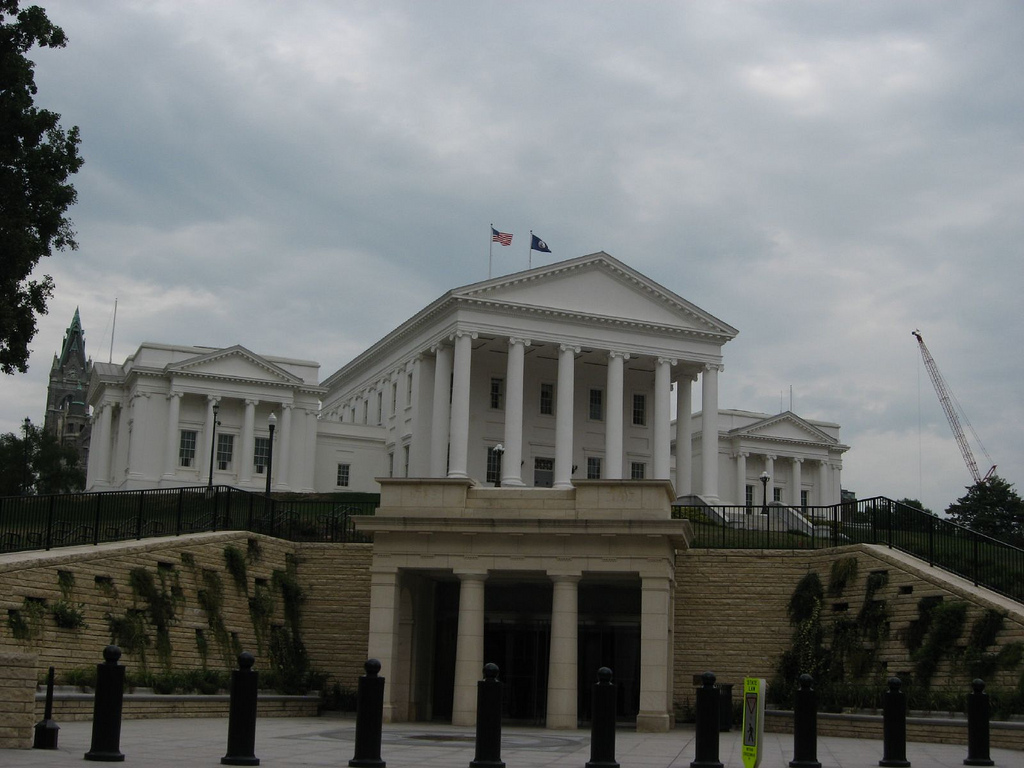
For example, at Virginia Commonwealth University, DACA recipients living in Virginia would only have to pay $14,490 in tuition and fees, much less than the $35,798 price tag for out-of-state students.
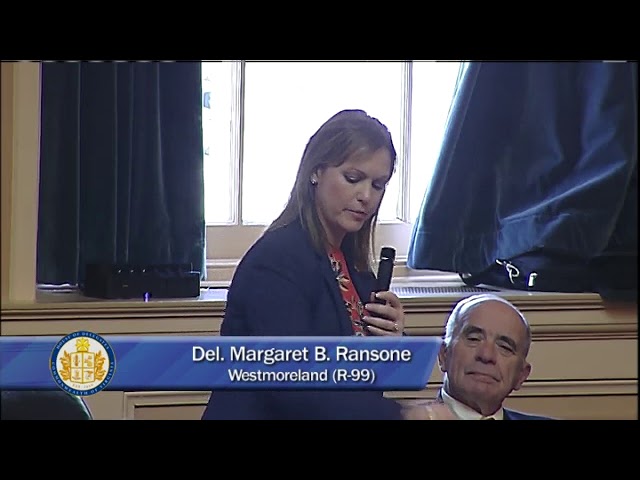
In a heartfelt speech which has since racked up hundreds of thousands of views online, Delegate Margaret Ransone (R-Kinsale) spoke on her career, her accomplishments, and her service in the General Assembly following days of heated and uncivil debate over the ratification of the Equal Rights Amendment.
“I am a woman and I’m an elected member of the oldest legislative body in the New World, the Virginia House of Delegates,” opened Ransone. “Needless to say I’m very proud of that and I’m proud of how I got here.”
Ransone, in her eighth year as a delegate, helps manage her family’s oyster company, located in Kinsale, in Virginia’s Northern Neck.
Her voice breaking on occasion, Ransone rose to the floor on Tuesday following a heated committee hearing that morning in which she voted against ratification of the Equal Rights Amendment, saying it would be duplicitous of existing protections in the US and Virginia constitutions while potentially opening the door to taxpayer funding of abortion by court order.
In that hearing, Ransone said, attendees covered the ears of their young daughters when she began to speak, depriving the young women in attendance of the opportunity to hear both sides of the debate.
Ransone said feeling silenced was a low point in her public service career.
“Do you know as soon as I started to speak, mothers in the room who simply disagreed with my position covered their daughters ears, as a sign to me and to their daughters that in the political process you don’t have to listen to people who mom disagrees with. And, to be honest, it was a low my public service career because when I simply wanted to empower young women that message delivered from a Republican woman simply wasn’t worth hearing.”
“Well, today, I will deliver that message again, to the young women and to their mothers and to daughters, and even to the twenty seven women in this body. Never, never let anyone tell you that you need anything more than hard work, determination, heart, and a strong work ethic to be successful in life,” Ransone continued.
Earlier that day, several measures making Virginia the 38th state to ratify the Equal Rights Amendment failed in the House’s Privileges and Elections Subcommittee #1, which Ransone chairs, following earlier passage in the Senate. While the full Privileges and Elections committee could still report the resolutions, observers said the subcommittee recommendation was likely to be followed, resulting in the amendment’s failure this year.
The committee’s vote followed weeks of debate and rallies by supporters and opponents of the amendment, which grew increasingly heated as the session dragged on.
Ransone also dismissed suggestions that men had “bullied” her into voting a specific way.
“The men in this body, on both sides of the aisle, they respect me and they have become incredible friends to me, and I’ve earned their respect,” she continued, praising her colleagues. “They’ve embraced me, and they’ve embraced my opinions, and they believe in me. And that’s incredible.”
“They empower me to speak my mind just like I’m doing today.”
Responding forcefully, Ransone said her vote was hers alone, elaborating on why she felt the Equal Rights Amendment was not necessary.
“And as a strong independent woman it was my choice to vote against the ERA. Don’t misunderstand what I’m saying. Women deserve equal treatment. Women deserve to be paid fairly. Women deserve to have every opportunity in life. Just like a man does.”
“And thanks to the 14th Amendment and the Virginia Constitution violating any one of those is against the law.”
Ransone also warned that ratification of the measure currently before the General Assembly could lead to years of court challenges, as the Congressionally-imposed deadline for ratification passed in 1982, one decade after the amendment was approved on Capitol Hill and sent to the states.
Previously, in the 1939 case Coleman v. Miller, the Supreme Court ruled that Congress did have the authority to set a deadline for ratification.
Writing a majority opinion in a case concerning Kansas’ vote to ratify a child labor amendment, Chief Justice Charles Evans Hughes stated such a limitation was a “question for the political departments, with the ultimate authority in the Congress in the exercise of its control over the promulgation of the adoption of the amendment.”
Continuing the message she shared earlier in committee, Ransone closed by encouraging young women to follow their dreams and let nothing stand in their way.
“Never let anyone tell you that you need to wait on any law to be successful,” she said. “Nothing stopped any of us with hard work and determination and a big heart nothing’s going to stop you either.”
In the end, Ransone had the last word — turning what had been an attempt to silence her voice into a speech which went viral on the Internet.