About The Author

Alex Lemieux

Alex Lemieux is a Richmond-based editor with The Republican Standard.

Showing: 111 - 120 of 636 Articles

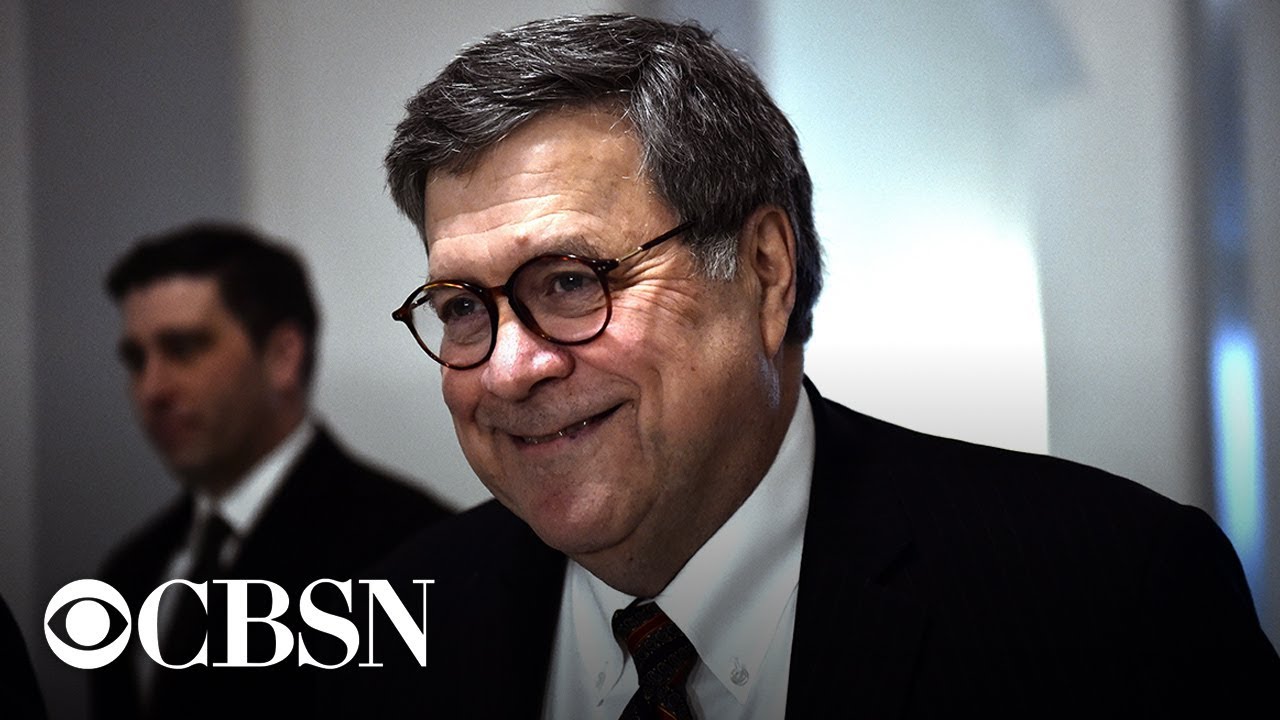
William Barr, Trump’s Pick For Attorney General, Testifies In Senate Confirmation Hearing

The Senate confirmation hearing for William Barr, President Donald Trump’s new pick for attorney general, began Tuesday morning, seemingly less contentious than the hearings that dominated autumn 2018 with Supreme Court Justice Brett Kavanaugh. Barr served as the 77th Attorney General under the late former President George H. W. Bush from 1991 to 1993.

The Reagan-era policy staffer was known as a strong defender of presidential power and aggressive actions on terrorism and drug-trafficking. Regardless, during his 1991 confirmation hearing he received a good reception from both Republicans and Democrats.

One of the biggest issues surrounding the confirmation of Barr is how he will handle White House Special Counsel Robert Mueller’s investigation into Russian collusion into the 2016 presidential election. Many on the Senate Judiciary Committee prompted Barr to reveal if he would act to protect the president if the eventual release of the report would incriminate the commander in chief.

With talk of the upcoming departure of Deputy Attorney General Rod Rosenstein, who has been at odds with President Trump in the recent past, Barr explained that he has nothing to do with the decision. Although Barr would be allowed to choose his deputy for the Department of Justice (DOJ), he reiterated that he has asked Rosenstein to stay on for “a period” if he is confirmed.

Barr also answered questions on whether he would allow Trump to direct him in the Russia investigation, after ousted Attorney General Jeff Sessions recused himself in the weeks after the president’s inauguration – an issue that began the tumultuous relationship between the two.

“I will not be bullied into doing anything I think is wrong,” Barr said.

Recently, however, Senator Kamala Harris (D-CA), a widely-speculated 2020 Democratic presidential candidate, believes Barr should recuse himself from overseeing Mueller’s investigation.

On Tuesday, senators Richard Blumenthal (D-MA) and Dianne Feinstein (D-CA) charged that Barr that he must act as a fully independent attorney general, regardless of the wishes of the president, who has said that he does not want a DOJ head that will recuse himself. Furthermore, Feinstein prodded Barr to commit to not interfering in the Russia probe.

“The special counsel’s investigation is set by his charter and by the regulations, and I will ensure those are maintained,” Barr said, adding that he will not terminate the investigation “without good cause.” He also said the special counsel “is not involved” in a witch hunt.

Although Senate Judiciary Chairman Lindsey Graham (R-SC) said the process to confirm and the subsequent responsibilities of Trump’s pick for attorney general “will be challenging,” he expressed confidence in Barr during the questioning insofar as Mueller’s investigation is concerned. Barr said Mueller will be allowed to continue the investigation, making the results public, consistent with federal regulations.

“I believe it is in the best interest of everyone…Bob will be allowed to finish his work,” he said, who also has a friendly relationship with the special counsel.

As the confirmation hearings continue, Barr will also be grilled on presidential powers, immigration enforcement, abortion and the validity of Roe v. Wade (1973), the handling of enemy combatants and the constitutionality of torture, protections for journalists, and his past actions in previous administrations.

If Barr becomes the 85th attorney general, he will be the first to repeat the position since its inception in 1789. He will replace acting-Attorney General Matt Whitaker who was thrust into the position following his tenure as chief of staff to former Attorney General Sessions after a two-year, mostly bad-tempered relationship with President Trump.
Shutdown Impasse Likely To Extend Through SOTU Address At Month’s End

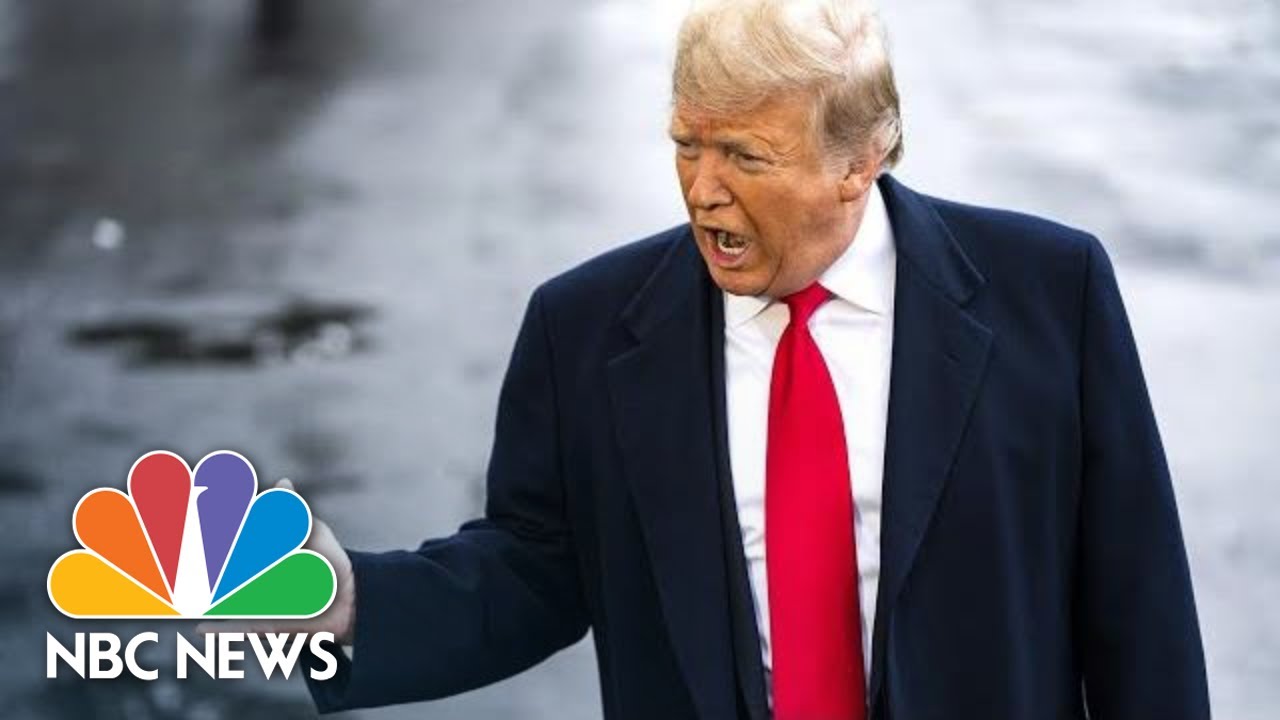
As the 116th Congress returns to Capitol Hill for its first full week of legislative business since Democrats reclaimed the majority in the House of Representatives, both parties in power will continue to struggle to reach a funding deal to reopen 25 percent of the federal government. Even though money ran out on December 21, 2018 – marking the longest ever federal closure – no ground has been made by either President Donald Trump and Republicans or Democrats.

The next landmark adding to the shutdown saga is likely to be the State of the Union address set to air January 29. For the next two weeks, there is little sign of a deal yet to be made; however, the political consequences of the impasse are continuing to build.

Over the weekend, 2,000 federal workers protested outside the White House that has so commonly been associated with contentious talks with congressional leaders over the shutdown. At least 800,000 furloughed federal workers have come to terms with missing paychecks, highlighting the fact that nearly 80 percent of American workers live paycheck to paycheck.

Senator Lindsey Graham (R-SC) has encouraged Trump to reopen the government for several weeks to continue negotiating with Democrats over the U.S.-Mexico border wall. The short-term fix would at least allow federal employees to be paid, dampening the negative consequences of the over three-week-long standoff in Washington.

Regardless, the president has stood firm on his $5 billion request for funding his campaign promise of a southern border wall, adding during last week’s national address from the Oval Office that there is a “growing humanitarian and security crisis” at the border.

President Trump, targeting Speaker of the House Nancy Pelosi (CA-14) and Senate Minority Leader Schumer (D-NY) for inaction, said on Twitter earlier today, “I’ve been waiting all weekend. Democrats must get to work now. Border must be secured!”

Although the commander in chief asserted weeks ago that he would “take the mantle” on the government shutdown, he is now placing the blame on Democrats in Congress. Senate Majority Leader Mitch McConnell (R-KY), also ready to battle a Democratic lower chamber, said the GOP majority in the Senate will not deliberate anything the president will not sign.

Trump is currently warming to the idea of declaring a national emergency to build the southern border wall, allowing the White House to bypass congressional appropriations and tap into various unspent federal money, which will come from military construction and disaster relief. However, Democrats, and even some Republicans, oppose an emergency declaration that would undoubtedly be challenged at the Supreme Court level, and be an unprecedented move that could affect the power of the presidency for generations to come.

If the funding impasse remains unresolved through President Trump’s second address to the union at the end of January, the country could face dire economic repercussions if the government shutdown lasts, as Trump has said before, for “months or even years.”

With nine of the 15 federal agencies closed, disaster relief could be delayed, leading to unforeseen circumstances as the winter storm season grows on. The federal court system would nearly cease operations as asylum requests are already back logged by months. Lapsed inspections from both the Food and Drug Administration (FDA) and the Environmental Protection Agency (EPA) could lead to dangerous outbreaks. The Internal Revenue Service (IRS) will not be able to process and send out tax refunds. Over eight million low-income Americans could lose food stamps, and at least two million without rental assistance could face eviction.

One way or another, though, President Trump says his proposed border wall, which has now been dubbed “peaches,” for currently unknown reasons, will get built. The question is, however, who will pay for it and will the federal government fully reopen anytime soon?

After Trump’s National Address, Democratic Rebuttal, U.S. Government Enters Longest Ever Shutdown

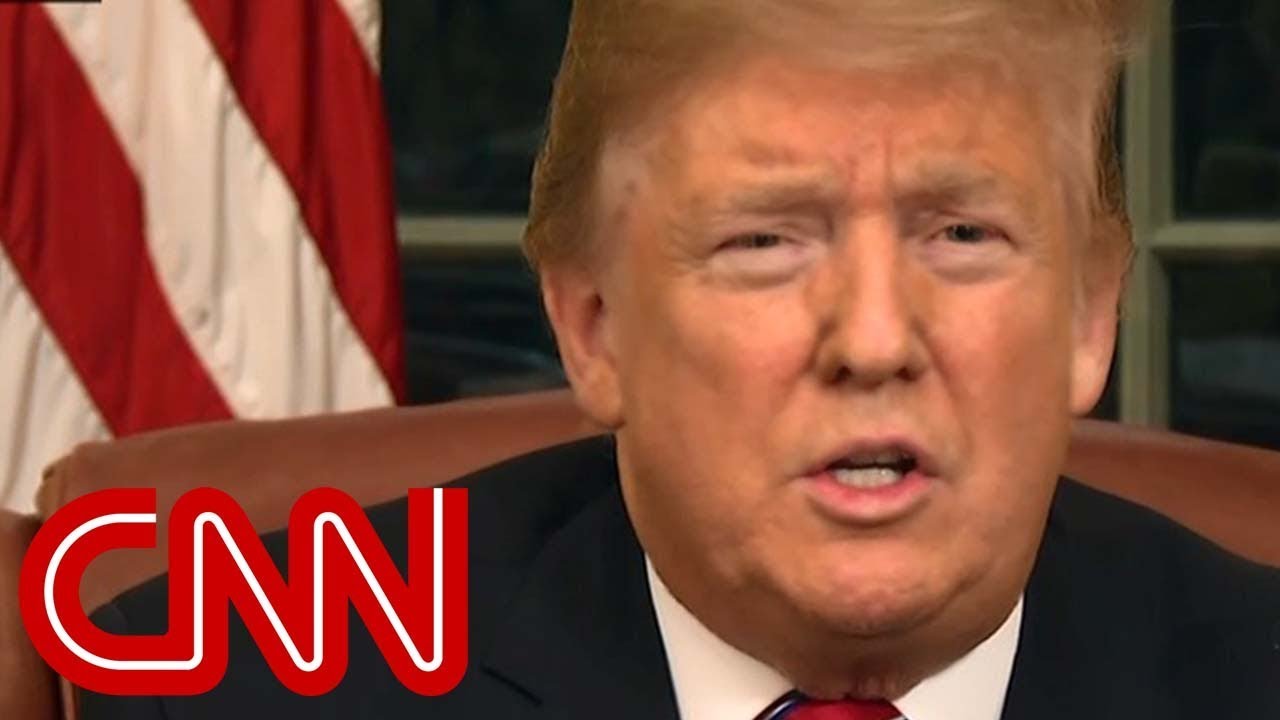
In his first address to the nation from the Resolute Desk in the Oval Office, President Donald Trump remarked on the “growing humanitarian and security crisis” at the southern border, which is just a smaller part of the contention between both parties and both houses of Congress on immigration reform. Although the address – followed by a Democratic rebuttal from Speaker of the House Nancy Pelosi (CA-12) and Senate Minority Leader Chuck Schumer (D-NY) – marked a few moments of semi-civility in a Washington filled with political volatility, the partial government shutdown continues into its record-setting length of 21 days tomorrow as a deal is yet to be had between Republicans and the new Democratic majority in the House of Representatives.

Federal funding ran out at midnight on Friday, December 21, closing nine departments within the U.S. government.

Last night, the president cited examples of recent violent acts committed by undocumented immigrants, including an instance last month when a Stanislaus County, California, police officer was and killed by a man who was in the country illegally. He attempted to bolster his argument through other negative effects stemming from the border crisis like the ongoing opioid epidemic.

“The cost of illegal drugs exceeds $500 billion a year. Vastly more than the $5.7 billion we have requested from Congress,” the president said. He also added that the border wall would “very quickly pay for itself.”

Reiterating a notion from the days of his presidential campaign, Trump again explained the “wall will always be paid for indirectly by the great new trade deal we have made with Mexico,” referring to the newly-cemented U.S.-Mexico-Canada Agreement (USMCA).

“Some have suggested a barrier is immoral,” President Trump continued in his address, but asked, “then why do wealthy politicians build walls, fences, and gates around their homes?”

“They don’t build walls because they hate the people on the outside, but because they love the people on the inside. The only thing that is immoral is for the politicians to do nothing and continue to allow more innocent people to be so horribly victimized,” he said.

In the opposition party’s rebuttal, Schumer and Pelosi said the president has “chosen fear” to govern what they call the “Trump shutdown,” adding that the rhetoric from the White House “has been full of misinformation and even malice.”

Speaker Pelosi then charged President Trump to “stop holding the American people hostage…stop manufacturing a crisis,” and to “re-open the government.”

On Wednesday afternoon, President Trump reportedly “slammed the table” and stormed out of a meeting with congressional leaders at the White House after Speaker Pelosi reiterated that the U.S.-Mexico border wall will not be funded in any legislation coming from the new majority party in the House. Following Senator Schumer’s comments during the rebuttal of the Oval Office address, he repeated that Trump has thrown another “temper tantrum” during the government shutdown.

Trump’s most ardent supporters and political allies were quick to come to his defense after the prime time address and this afternoon’s meeting, reprimanding Democrats and accusing them of failing to negotiate a deal for the American people. The president also aired out his response on Twitter shortly after the meeting went south.

“Just left a meeting with Chuck and Nancy, a total waste of time. I asked what is going to happen in 30 days if I quickly open things up, are you going to approve Border Security which includes a Wall or Steel Barrier? Nancy said, NO.” President Trump said.

“I said bye-bye, nothing else works!”

According to a report from Business Insider, both House Minority Whip Steve Scalise (LA-1) and Vice President Mike Pence rejected the claim that Trump acted erratic during the meeting with congressional leaders, adding that the president “came into the room and ‘passed out candy.’”

The commander in chief has shown little room to budge off of his request for $5.7 billion in funding for the proposed southern border wall. Senate Majority Leader Mitch McConnell (R-KY), ready to battle a Democratic lower chamber, said that the GOP majority will not deliberate anything the president will not sign.

Regardless of having a clear strategy towards re-opening the federal government, the president said the Trump Administration and Republicans are “totally unified” and are in “solidarity.”

During an exchange with reporters outside the White House, Speaker Pelosi accosted Trump for continuing the government shutdown, which has affected at least 800,000 federal workers who risk falling behind on paychecks. She said he was “out of touch” with those whom furloughs are affecting, although Trump has stated that government workers are “telling him” to “hold out” to “get the wall built.”

“He thinks maybe they could just ask their father for more money. But they can’t,” Pelosi added.

On the opening day of the 116th Congress, Democrats introduced a package of bills that would fund eight of the currently-closed federal departments through September 30, with the Department of Homeland Security funded through February 8, contingent on a few specific immigration reforms.

Last Friday, during a White House press conference in the Rose Garden, President Trump said to reporters that he told Democratic congressional leaders that he would keep the government partially closed for “months, or even years,” or “as long as it takes” to get the funding necessary to construct his campaign promise of a southern border wall to stave off illegal immigration.

As Trump is just hours away from breaking the record for the longest ever government shutdown – set by then-President Bill Clinton, from December 16, 1995, to January 6, 1996, at 21 days – he must begin to contend with waning support for the closure as more and more Americans feel the brunt of a closed federal government.

Port Of Virginia Welcomes Nation’s Largest Ship Container Cranes

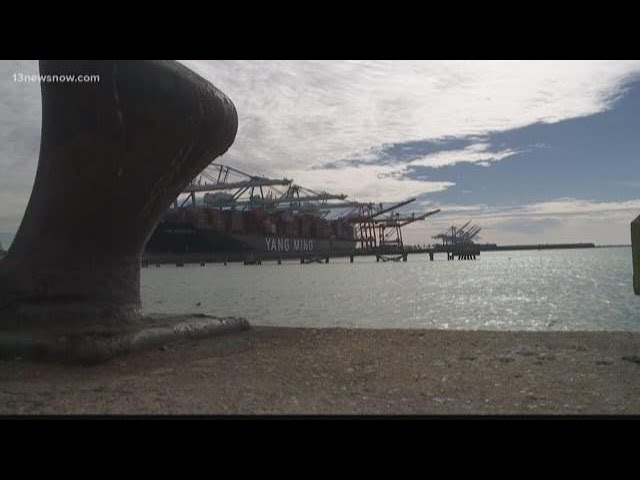
Virginia just received four of the “nation’s largest” ship-to-shore cranes on Monday to operate at the Port of Virginia in Hampton Roads, marking the most recent effort for the international port to accommodate bigger container ships in their expansion project. Standing 170 feet tall, the Chinese-made cranes made their way through the mouth of the Chesapeake Bay as many captured photos of the leviathans, with officials from the Virginia Port Authority set to service the higher-volume Ultra Large Container Vessels (ULCVs) currently calling on the port as trade on the Virginia coast had a record-setting year in 2018.

Recent port expansions at the Panama Canal have increased the usage of larger container ships between the Eastern Hemisphere and the East Coast of the U.S. As the cranes should be up and running in Portsmouth in March, they will join four new truck gates at Virginia International Gateway (VIG) as part of a $320 million project to increase capacity and efficiency at the terminal, according to a report.

The VIG project is part of a $700-million expansion of the Port of Virginia’s two primary container-handling terminals, the other being Norfolk International Terminals (NIT).

The new cranes will be able to reach across a vessel that is 26 containers wide, three to four containers wider than most cranes.

“Having these cranes sail into our harbor says, very clearly, to the ocean carriers and the industry that we are prepared for the next evolution and the one to come after that,” said John F. Reinhart, CEO and executive director of the Virginia Port Authority in a report from AP.

Luckily, the type of Chinese crane the Port of Virginia purchased was taken off the Trump Administration’s tariff list. The port had approved $40 million in spending for the cranes, with the proposed 25 percent tariff meaning that cost overruns could have exceeded $10 million for which it was not originally budgeted.

Nevertheless, as battle between other domestic ports is underway to attract the most shipping traffic – with dredging occurring in Georgia and South Carolina and bridge elevations in New York City – officials in Virginia will work to dredge Norfolk Harbor to 55 feet and widen the entrance channel to the port to 1,300 feet to host larger container ships. The plan was released last January by the U.S. Army Corps of Engineers, part of the president’s infrastructure program.