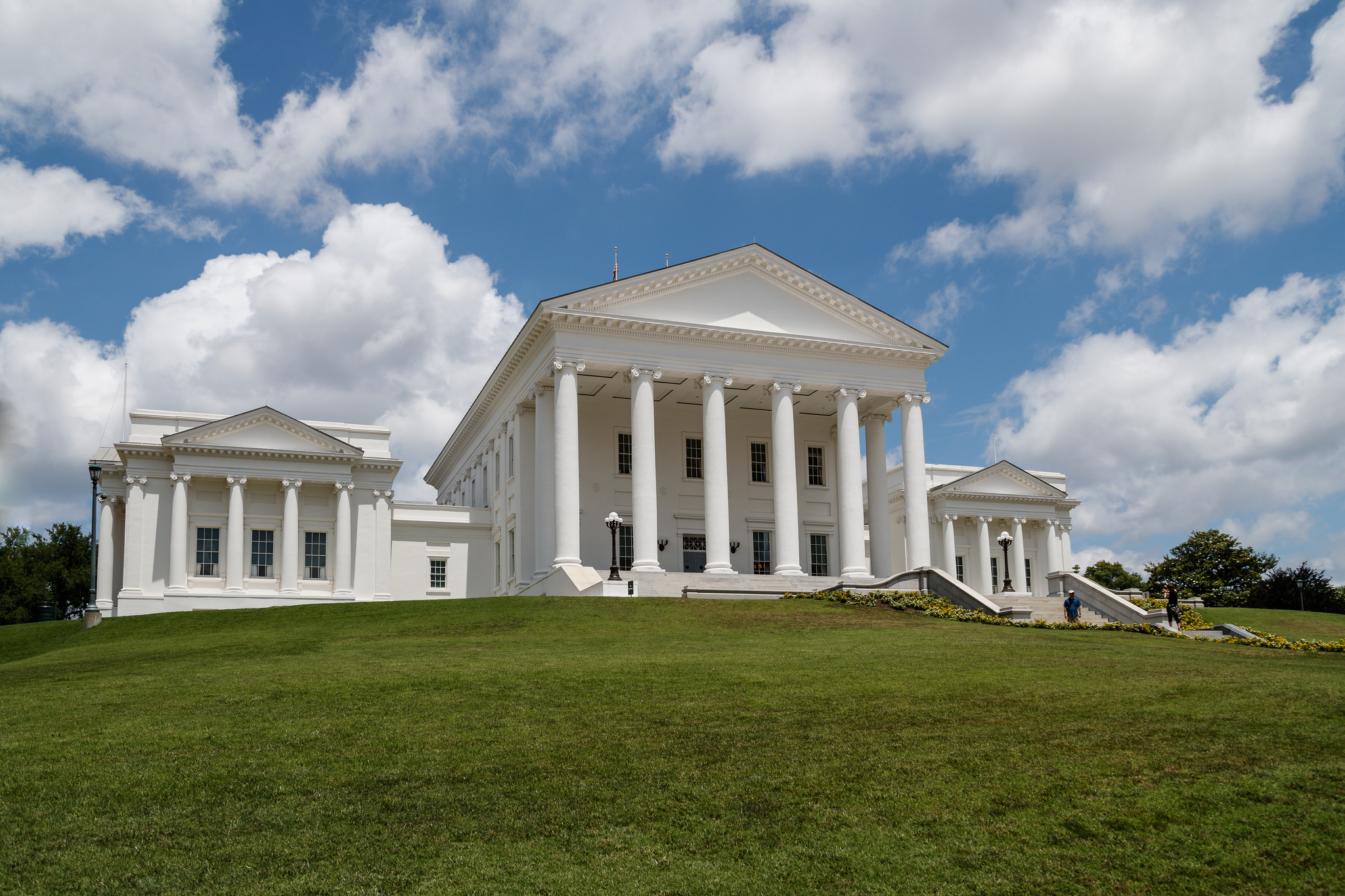
The first election of 2019 will feature Republican candidate and former House of Delegates member Joe May and Democratic candidate and Delegate Jennifer Boysko (D-Fairfax) in tomorrow’s January 8 special election.

Virginia's Public Square
Virginia's Public Square

The first election of 2019 will feature Republican candidate and former House of Delegates member Joe May and Democratic candidate and Delegate Jennifer Boysko (D-Fairfax) in tomorrow’s January 8 special election.
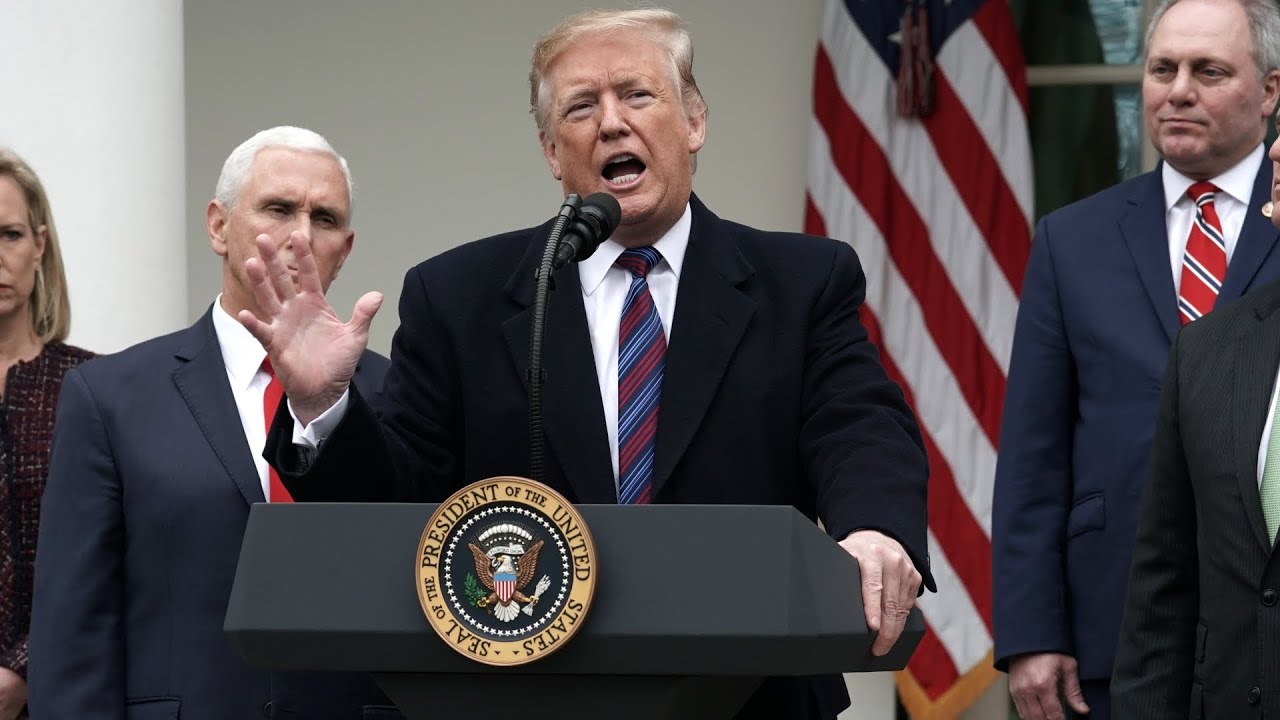
During a White House press conference on Friday afternoon in the Rose Garden, President Donald Trump said to reporters that he told Democratic congressional leaders in a meeting this morning that he would keep the government partially closed for “months, or even years,” or “as long as it takes” to get the funding necessary to construct his campaign promise of a southern border wall to stave off illegal immigration. Federal funding ran out at midnight on Friday, December 21, 2018, leading to 800,000 government employees being affected by the standoff between the commander in chief and Congress.
Although Trump reaffirmed his commitment to wall funding over the Christmas holiday, he called the Friday morning meeting to discuss spending packages “very productive.” Democrats, on the other hand, said the engagement was “contentious,” following the attitude from newly-elected Speaker of the House Nancy Pelosi (CA-12) and her promise to not fund any portion of the president’s “immoral, ineffective, and expensive” wall, per her remarks throughout the shutdown.
Regardless, as Democrats took the majority in the House of Representatives in the 116th Congress this week, essentially erasing any chance to pass legislation that includes border wall appropriations, a bipartisan contingent of congressional leaders have met with the president to solve the budgetary impasse that is now going on three weeks.
In December, President Trump requested $5 billion to build the U.S.-Mexico border wall, following America’s brush with multiple Central American migrant caravans led by high-profile international immigration rights organizer Pueblo sin Fronteras in 2018, with another set to leave embattled Honduras later this month. According to reports, however, the 15,000-strong caravan is set to pass up the southern U.S. border and travel to the states of Chiapas and Oaxaca in Mexico. Newly-installed Mexican President Andrés Manuel López Obrador has pledged to dole out work visas for Central American migrants, part of an $8 billion infrastructure project expected to create hundreds of thousands of jobs over the next few years.
While around 6,000 migrants remain encamped just a few hundred feet from the El Chaparral border crossing in Tijuana – suffering from delays in asylum processing due to the partial government shutdown – President Trump has called for being prepared to close off the southern border to cease the increases in illegal border crossings.
An AP-NORC poll released today shows that nearly half of Americans identify immigration as a top issue, with 49 percent of respondents mentioning immigration as one of the top five problems they hope the government addresses in 2019, up from 27 percent in December 2017. With the partisan divide, 65 percent of Republicans say immigration is one of the top five problems facing the country, up from 42 percent in 2017. Among Democrats, 37 percent cite immigration as a top issue, compared with around 20 percent just over one year ago.
Trump is willing to keep 25 percent of the U.S. government – nine departments in all – closed “for a very long period of time…months, or even years” until he gets the funding, Senate Minority Leader Chuck Schumer (D-NY) said to reporters outside the White House Friday afternoon. Frustrated with the impasse, Schumer opined that the GOP is using the government as a “hostage” to get the wall.
CNBC reports that Trump has selected Vice President Mike Pence, White House Senior Advisor Jared Kushner, and Secretary of the Department of Homeland Kirstjen Nielsen to carry on meeting with congressional leaders from both the Democratic and Republican parties to come towards a deal on federal funding.
On Monday, Trump, warming towards reopening the government, said that he was “ready to go” to make a deal, remarking that he would be willing to accept funding figures for the border wall that are somewhere between the $5 billion he has requested, and the $1.6 billion congressional Democrats are willing to pass. However, Speaker Pelosi reiterated earlier this week that any funding measures pursued by the new Democratic majority will include “nothing for the wall.”
“There is no amount of persuasion he can do to say to us, ‘We want you to do something that is not effective, that costs billions of dollars,’” she said Thursday morning on the “Today Show” before taking the gavel in the House.
Legislation forwarded on the opening day of the 116th Congress from Democrats included funding for the closed departments through September 30, with another measure keeping the Department of Homeland Security (DHS) open until February 8 as contention still surrounds the proposed U.S.-Mexico border wall and other immigration policies stemming from the Trump Administration.
Regardless, since Democrats did not gain ground in the upper chamber of Congress, Senate Majority Leader Mitch McConnell (R-KY), ready to battle against the opposition party, said that any funding package President Trump does not support will not have a scheduled vote.
In the Rose Garden this afternoon, the president, when asked about what he said last month referring to being “proud” to close the federal government to get the border wall built, said “I’m very proud of doing what I’m doing. I don’t call it a shutdown,” explaining that he is negotiating for the wall to protect Americans and bolster national security. However, both Schumer and Pelosi have reprimanded the commander in chief, calling the 14-day-long closure the “Trump Shutdown.”
In terms of what the president could sign to reopen the government, Trump could trade a proposed deal for DREAMers – those protected under the Obama-era Development, Relief, and Education for Alien Minors Act – to get the funding needed for the border wall. He could also negotiate for more favorable terms in the eyes of the majority party on funding, while looking into other departments for alternative funding options.
In spite of that, the House and Senate, while just three days into this year’s session, have adjourned until Tuesday. Therefore, the closure will carry into at least next week unless an agreement is made.

Blasting past economists’ expectations, the U.S. added 312,000 jobs in December 2018, an encouraging sign of performance in an economy that has been hit by rising interest rates, a three-month wave of chaos on Wall Street, slowing international growth, tariff battles with major trading partners, and a partial government shutdown coming up on its third week. The U.S. Labor Department also reported Friday that the unemployment rate rose slightly from 3.7 percent to 3.9 percent; however, it reflects a pro-growth increase in people entering a still-hot job market.
“With more than 5,000,000 jobs added since the 2016 election, the American economy surpassed 150,000,000 jobs for the first time ever,” Labor Secretary Alexander Acosta said in a press release from the department. He added that more people having confidence in the job market “is welcomed news as job creators look to fill seven million open jobs.”
In the report, upward revisions were also given to the October and November jobs reports, which now saw a total of 370,000 jobs added to the economy.
Significant job gains in December were seen across all industries, with the construction, retail, manufacturing, education, healthcare, food services, and leisure and hospitality sectors leading the way.
Healthcare and education services added 82,000 jobs in December, the biggest jump since February 2012. Restaurants saw a gain of 40,700 jobs, construction added 38,000, manufacturing increased by 32,000, and retail was up by 23,800 on the nationwide payrolls.
Average hourly pay ticked up 3.2 percent from December 2017, with last month being the third straight wherein year-over-year wage gains exceeded three percent. Prior to October 2018, the last time average hourly wage gains exceeded that figure was April 2009, according to the Labor Department.
Overall, 2.6 million new jobs have been created in the past 12 months, and of those months, eight saw the unemployment rate under four percent, with record jobless lows in 2018 for African-Americans, Asian-Americans, Hispanic-Americans, and those without a high school degree.
Recently, economists believed the U.S. was edging near “full employment,” but the numbers show that prospective workers still have confidence in employers hiring in a tightening job market. Although December’s numbers were almost 50 percent above the 2018 monthly job creation average of 217,000, economists estimate that hiring will slow in 2019. With America beginning to enjoy its 10th year of economic expansion, the past few months have shown the effects of slowing growth caused by waning returns from the 2017 Republican-led federal tax overhaul teamed with aggressive interest rate hikes from the U.S. central bank.
Stocks tumbled during the holidays, leading to the worst Christmas Eve ever on Wall Street, met with rising concerns over slowing economic growth that has caused major industry firms to fall past correction territory, and the S&P 500 index on pace for its biggest percentage fall since the Great Depression. However, Wall Street responded well to the December jobs report, with the Dow Jones Industrial Average up over 700 points midway through the Friday trading session after the index also suffered its worst December decline since 1931.
President Donald Trump, who has enthusiastic about the “GREAT” jobs report on Twitter, may not see similar figures in January if the partial government shutdown – affecting approximately 800,000 federal employees and 25 percent of the federal government – lingers on, spurred by a stalemate between the White House and a new Democratic majority in the House of Representatives over funding for the U.S.-Mexico border wall.
In a report from AP, Chairman Kevin Hassett of the White House Council of Economic Advisers, said that next month’s report from the Labor Department “could be weak” if the shutdown continues. He explained that the hundreds of thousands of government workers “who could say they’re not working, which would lower the job totals….even though those workers would be paid back wages once the government fully re-opened.”
“So when we see the January jobs number,” Hassett said, “it could be a big negative.”
Other economic concerns for this year may involve Federal Reserve Chairman Jerome Powell, who has come into the president’s cross hairs over the past few months after four quarter-point interest rate hikes in 2018. The market will have to weigh whether the strong job growth in December encourages the Fed to raise rates aggressively in 2019. Regardless, a downshift in economic growth worldwide could slow the process of the central bank working to clear its balance sheet.
Tariffs, of course, play a big role in the equation with slowing worldwide growth as major U.S. trading partners are hit with retaliatory duties amid Trump’s effort to renegotiate trade deals in carrying out an “America First” agenda. In late 2018, the Trump Administration scored a win with the rollout and implementation of the replacement to the 24-year-old North American Free Trade Agreement (NAFTA), the U.S.-Mexico-Canada Agreement (USMCA), which will govern nearly $1.2 trillion in trade as the “biggest trade deal” in U.S. history, per the president’s remarks.
As President Trump looks to tackle China next, his continuous admonishment of Beijing’s predatory trade practices and misdealings surrounding intellectual property has led to some staggering economic affects in the U.S. from one of the nation’s biggest trading partners.
Tech giant Apple, who has a major telecommunications market share in the Eastern Hemisphere, has lost $452 billion in market value over the last three months, since its peak of about $1.138 trillion on October 3. The company’s stock crashed almost 10 percent Thursday following sales becoming “jeopardized” by the trade war between the U.S. and China and changing consumer demands as Chinese customers pass up high-dollar American-made products like iPhones and vehicles from Detroit-based Ford Motor Company, among similar situations with other manufacturers.
The Atlanta Federal Reserve’s GDP Now economic forecasting model places real GDP growth in the fourth quarter (Q4) of 2018 at a seasonally-adjusted annual rate of 2.6 percent, down from 2.7 percent projected on December 21. Consumer spending and private fixed investment growth is also likely to decrease this month before an annual economic report deciphering 2018 is released at the end of January.
Even with more than 5,000,000 jobs added to the U.S. economy since he won the 2016 General Election, President Trump, who has continuously called much of the record-breaking economic figures his own, may have to deal with slower growth in 2019 as economists and business leaders suggest an upcoming recession in 2020.

After ousting Defense Secretary and four-star Marine General Jim Mattis, President Donald Trump is looking for a replacement to head the Pentagon. One man who the president is said to be considering is Reagan-era secretary of the Navy and former Democratic senator from Virginia, Jim Webb.
President Trump, enraged over Mattis’ highly critical resignation letter, pushed out the general two months earlier than he originally planned.
As Trump withdraws American troops from embattled Syria and Afghanistan, he may bypass traditional foreign policy-minded, hawkish Republican picks and decide to put the faith of the U.S. military into the hands of an outspoken opponent of the Iraq war. In the past, and even more recently, Webb has advocated to pull troops from the Middle East, also to become more aggressive in handling China.
In a 2015 Democratic primary debate, then-presidential contender Webb accosted Beijing’s military expansion in the South China Sea and cyberattacks on American institutions.
“If you want a place where we need to be in terms of our national strategy, a focus, the greatest strategic threat that we have right now is resolving our relationship with China,” Webb said in a report from the New York Times.
While President Trump has remarked that acting-Defense Secretary Patrick Shanahan, a former Boeing executive, may remain at the top spot at the Pentagon “for a long time,” other names have surfaced as potential replacements like Senator Tom Cotton (R-AR), Senator Lindsey Graham (R-SC), and former Missouri Republican senator Jim Talent.
Nevertheless, much like Trump, Webb was also critical of then-President Barack Obama’s efforts in 2015 to strike a deal to curtail Iran’s nuclear program.
“The end result of this could well be our acquiescence in allowing Iran to develop a nuclear weapon,” Webb said.
In August, Trump reimposed sanctions to force Tehran to address its nuclear proliferation, which includes ballistic missile tests. Heightened tensions between the U.S. and Iran were also amplified as Tehran began carrying out naval exercises in the Strait of Hormuz, designed to send a message to Washington over the sanctions.
In 1984, then as a member of the Republican Party, Webb joined the Reagan Administration as assistant defense secretary for reserve affairs. Three years later, while secretary of the Navy, Webb pushed for modernizing the fleet, but resigned one year later after refusing to agree to reduce the size of the branch. Although Webb proposed upping the Navy to 600 ships, his expansionist view is in line with President Trump’s more modest goal of a 355-ship fleet and the construction of highly-advanced Gerald R. Ford-class aircraft carriers to rule the seas.
If Webb is chosen, however, he will undoubtedly be grilled during his Senate confirmation hearing about potentially “insensitive” comments he has made in the past regarding military practices, foreign policy, and his experience on the field of battle.
During his short-lived 2016 presidential candidacy, Webb made headlines when he was asked who he was most proud to have as an enemy. He replied with an anecdotal tale from his time during the Vietnam War where was wounded twice and received the Navy Cross for his service and bravery.
“I would have to say the enemy soldier that threw the grenade that wounded me, but he’s not around right now to talk to,” Webb said.
Though, he reportedly walked away from the presidential primary after alleged contention with some of the Democratic Party’s political issues.
Nevertheless, apart from serving as a captain in the U.S. Marine Corps and becoming a Reagan-era Navy bureaucrat, Webb would bring his experience as senator from 2006 to 2012 to the Pentagon. Webb sat on the on Armed Services Committee, serving on the Airland, SeaPower, and Personnel subcommittees, leading the latter as chairman. He was also on the Senate Foreign Relations Committee, serving as chairman of the East Asian and Pacific Affairs Subcommittee, and as a member of the African Affairs, European Affairs, and Western Hemisphere, Peace Corps, and Narcotics Affairs subcommittees.
Following former Virginia Governor Jim Gilmore‘s nomination for the position of ambassador to the Organization for Security and Cooperation in Europe (OSCE), Webb would be the second presidential hopeful from the Commonwealth to join the Trump Administration.
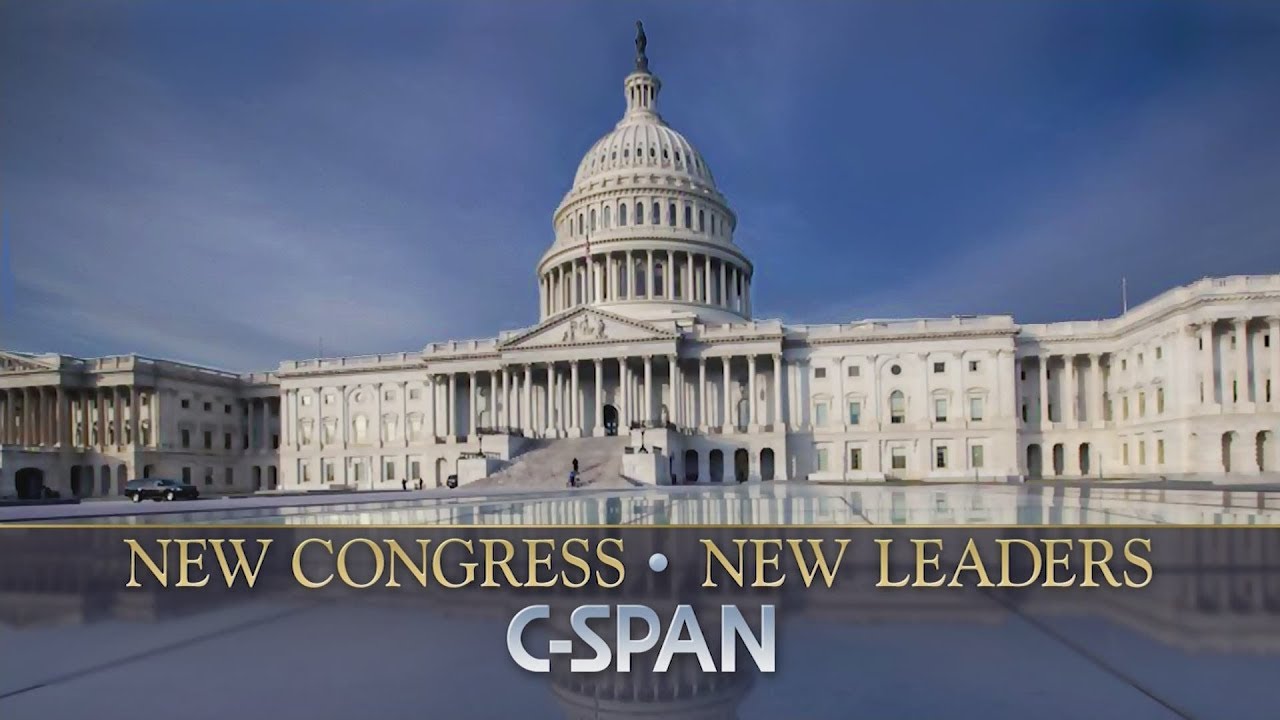
The 116th Congress has been sworn in and the Democrats have regained the majority in the House of Representatives after a blow to the Republican stronghold on November 6, 2018. As the President Donald Trump and Republicans go into what can only be foreshadowed as a tumultuous two years until the 2020 General Election, they will have to contend with the former and now current Speaker of the House Nancy Pelosi (CA-12).
Around noon, Democratic Congressman Hakeem Jeffries (NY-8) nominated Pelosi for the speakership, adding that under the tutelage of the California legislator, the Democratic Party will have Congress passing minimum wage increases, a proposed Medicare for All plan, a new voting rights act, and protection for the “DREAMers.”
Wyoming’s lone Congresswoman Liz Cheney gave a fiery rebuke, nominating Republican and former House Majority Leader Kevin McCarthy (CA-22) for speaker of the house, which was met with boos from the left and cheers from the right. Cheney said that McCarthy has been a leader in passing the Tax Cuts and Jobs Act (TCJA), legislation to help ward off the opioid crisis, and working to repeal parts of Obamacare, because “[government] is more of a burden than a help to small business across the country.”
As well, she said that Republicans led by McCarthy have been fulfilling the mission of the president in securing borders, reforming immigration policy, voting against the “devastating practice of sanctuary cities,” enthusiastically proclaiming “and, yes, madam clerk, build the wall,” which was met with a raucous response from both sides of the aisle.
Nevertheless, the votes were tallied out of 433 in quorum:
Pelosi (D): 219
McCarthy (R): 192
Others: 19
Present: 3
As Democrats are set to run the lower chamber for at least the next two years, their first task has been widely said to be making a deal with the White House to reopen the government, which is now in its 13th day closed.
Through the Christmas holiday, President Trump reaffirmed his commitment to at least $5 billion in wall funding to enhance security at the U.S.-Mexico border, saying in the Oval Office to reporters last week, “I can’t tell you when the government is going to be open…It’s not going to be open until we have a wall, a fence, whatever they like to call it…I’ll call it whatever they want…but it’s all the same thing, it’s a barrier.”
On Monday, however, Trump said that he was “ready to go” to make a deal to reopen the government. Reportedly, the president will now be willing to accept funding figures for the border wall that are somewhere between the $5 billion he has requested, and the $1.6 billion congressional Democrats are willing to pass. However, the liberal party has demanded that those dollars not be dedicated to any portion of President Trump’s “immoral, ineffective, and expensive” wall, per Pelosi’s remarks throughout the shutdown.
Earlier on the “Today Show,” she reiterated that any funding measures pursued by the new Democratic majority will include “nothing for the wall.”
“There is no amount of persuasion he can do to say to us, ‘We want you to do something that is not effective, that costs billions of dollars,'” she said Thursday morning. “That sends the wrong message about who we are as a country.”
Legislation to be forwarded in the opening day of the 116th Congress from Democrats would fund closed departments through September 30, with another measure keeping the Department of Homeland Security (DHS) open until February 8 as contention still surrounds the proposed U.S.-Mexico border wall and other immigration policies stemming from the Trump Administration.
Regardless, since Democrats did not gain ground in the upper chamber of Congress, Senate Majority Leader Mitch McConnell (R-KY), ready to battle against the opposition party, said that any funding package President Trump does not support will not have a scheduled vote.

President Donald Trump is inviting congressional leaders to the White House on Wednesday during the 12th day of the partial government shutdown, which has no end in sight just one day before a majority party switch in Washington. Federal funding ran out at midnight on Friday, December 21, 2018, leading to 800,000 government employees being affected by the standoff between the commander in chief and Congress.
Through the Christmas holiday, President Trump reaffirmed his commitment to at least $5 billion in wall funding to enhance security at the U.S.-Mexico border, saying in the Oval Office to reporters, “I can’t tell you when the government is going to be open…It’s not going to be open until we have a wall, a fence, whatever they like to call it…I’ll call it whatever they want…but it’s all the same thing, it’s a barrier.”
Senate Majority Leader Mitch McConnell (R-KY) adjourned the upper chamber on December 21 without deliberating a $5.7 billion funding package for the southern border wall from majority Republicans in the House that passed late the night before with a 217-185 vote. There is still no scheduled vote to reopen the entirety of the U.S. government based on the legislation as of yet.
After the House passed the short-term spending measure, Senator McConnell relayed to the White House that the votes – even to pass the bill with a simple, 51-member majority – were not there. Several senators put out statements confirming their opposition, including Jeff Flake (R-AZ), a fierce Trump opponent, saying he would resist wall money without broader immigration reforms, leaving the procedural dead on arrival.
On Monday, however, Trump said that he was “ready to go” to make a deal to reopen the government. “A lot of people are looking to get their paycheck, but the wall is a big part of border security,” he told Fox News.
Reportedly, the president will now be willing to accept funding figures for the border wall that are somewhere between the $5 billion he has requested, and the $1.6 billion congressional Democrats are willing to pass. However, the liberal party has demanded that those dollars not be dedicated to any portion of President Trump’s “immoral, ineffective, and expensive” wall.
Only a week ago, Trump insisted during an Oval Office meeting that he would take ownership of a partial government shutdown over the U.S.-Mexico border wall. “I will take the mantle. I will be the one to shut it down,” he said. Though, it seems that House Minority Leader Nancy Pelosi (CA-12) has now been cloaked with the responsibility – judging by both her and the president’s comments.
“One thing has now been proven. The Democrats do not care about Open Borders and all of the crime and drugs that Open Borders bring!” Trump tweeted less than 24 hours ago. “Border Security and the Wall ‘thing’ and Shutdown is not where Nancy Pelosi wanted to start her tenure as Speaker! Let’s make a deal?” the president added, prodding speaker-to-be Pelosi.
Responding to calls for her to come back from vacationing in Hawaii to Washington to make a deal, Pelosi took to Twitter to say:
“@realDonaldTrump has given Democrats a great opportunity to show how we will govern responsibly & quickly pass our plan to end the irresponsible #TrumpShutdown – just the first sign of things to come in our new Democratic Majority committed to working #ForThePeople.”
If the government shutdown continues, President Trump’s push for money to construct his campaign promise of a southern border wall “and have Mexico pay for it” could end up being a “read my lips” moment that many attribute to President George H. W. Bush‘s loss in the 1992 General Election to President Bill Clinton.
President Trump, however, seems to have confidence in his plan, consistently reiterating that shutting the government down is “worth” border security, energizing his most ardent supporters. He has used recent developments in a story from California where a Stanislaus County police officer was shot and killed by a man who was in the country illegally to bolster his argument.
Director of the Office of Management and Budget (OMB) and acting White House Chief of Staff Mick Mulvaney also weighed in recently on the situation.
“[Senate Minority Leader] Chuck Schumer [D-NY] voted for border security in 2006, he voted for it again…in 2011. It seems like Democrats really like border security when there’s a Democrat in office and don’t like it when Donald Trump is in office,” he explained to the “Fox & Friends” morning show last week.
The chief of staff also said that during a meeting last week with the the president, Senate minority leader, Vice President Mike Pence, and others, a deal may have been had after some ground was gained over funding discrepancies. However, “the more we’re hearing,” Mulvaney added, “Nancy Pelosi is preventing that from happening.”
In terms of what the president could sign to reopen the government, Trump could trade a proposed deal for DREAMers – those protected under the Obama-era Development, Relief, and Education for Alien Minors Act – to get the funding needed for the border wall. He could also negotiate for more favorable terms in the eyes of the incoming majority party on funding, accepting somewhere between the $5.7 billion passed by the House and the $1.6 billion that has been offered by the liberal caucus, while looking into other departments for alternative funding options.
Being somewhat unpredictable as to what he has signed at the Resolute desk in the past, President Trump, who reluctantly placed his signature on the $1.3 trillion omnibus bill to advert another government shutdown last year, could stick to what he said in early 2018 in a very similar situation, which was “never again.”

After significant costs and lackluster results with snow removal in Virginia, the Office of the State Inspector General (OSIG) will audit the Virginia Department of Transportation (VDOT) in 2019.
Republicans could see a future courting more of the traditional, conservative Hispanic voting base, especially in Northern Virginia.

Amid the chaos surrounding the funding battle over President Donald Trump’s southern border wall, a partnership between the U.S. and Mexico may help curb migration from Central America.
President Donald Trump doubled down on his criticism of the U.S. immigration system on Friday during the seventh day of the partial government shutdown that is affecting over 800,000 federal employees. The commander in chief’s demand for $5 billion for a wall on the U.S.-Mexico border may be sitting in a bill passed by the Republican-led House last week, but Congress is not set to deliberate on a funding package until the beginning of next year.
As the stalemate in Washington between the White House and lawmakers continues, Trump said that he is looking at not just leaving the government shutdown in place, but may also close the entire southern border.
“We will be forced to close the Southern Border entirely if the Obstructionist Democrats do not give us the money to finish the Wall & also change the ridiculous immigration laws that our Country is saddled with,” President Trump said on Twitter.
Although trade on the North American continent is now governed by the newly-implemented U.S.-Mexico-Canada Agreement (USMCA) signed into law by President Trump and his Canadian and Mexican counterparts, he went back on social media to criticize former U.S. trade relations with Mexico. He said that the failure of the recently-replaced North American Free Trade Agreement (NAFTA) lead to the U.S. losing “75 billion” a year in trade deficits. He added that he would consider closing the border, which, to him, looks like a “profit making operation.”
“Bring our car industry back into the United States where it belongs. Go back to pre-NAFTA, before so many of our companies and jobs were so foolishly sent to Mexico. Either we build (finish) the Wall or we close the Border,” Trump added.
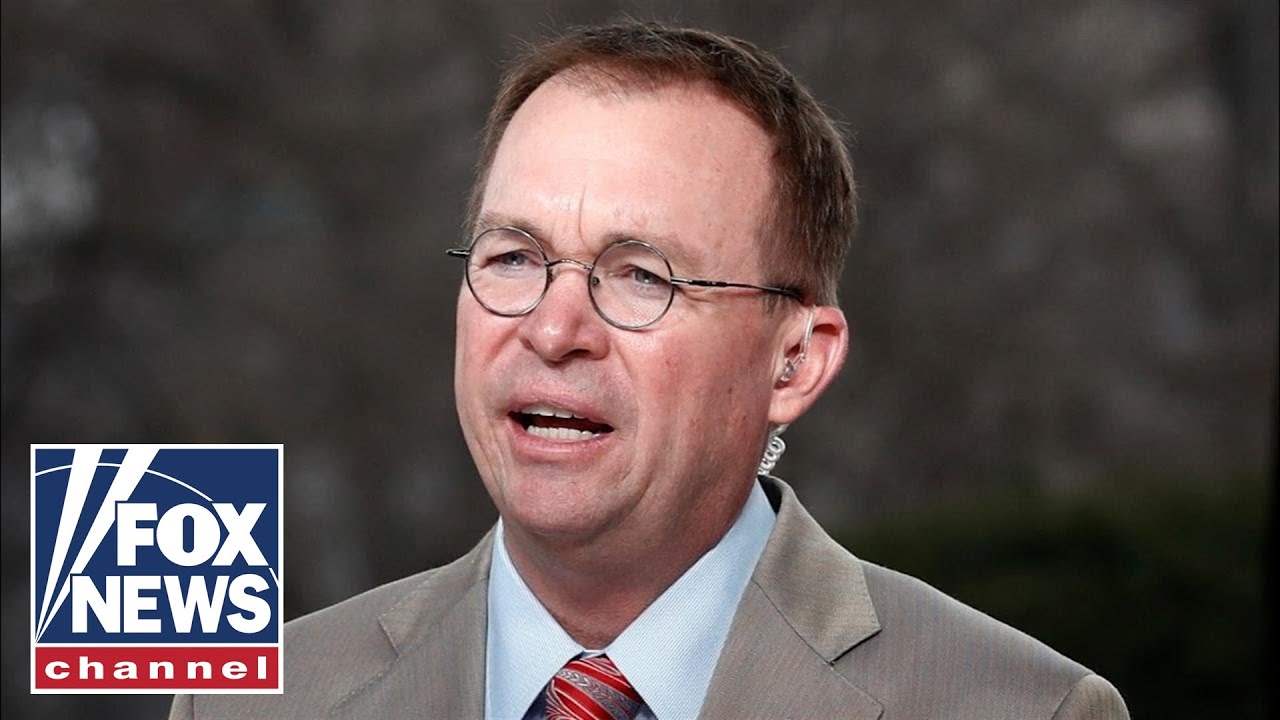
Director of the Office of Management and Budget (OMB) and acting White House Chief of Staff Mick Mulvaney appeared on the “Fox and Friends” morning show Friday and was asked if President Trump is serious about potentially closing the border to stave off illegal immigration.
“Yes, I think he is,” Mulvaney replied.
“[Senate Minority Leader] Chuck Schumer voted for border security in 2006, he voted for it again…in 2011. It seems like Democrats really like border security when there’s a Democrat in office and don’t like it when Donald Trump is in office,” he explained.
The chief of staff said that during a meeting last week with the the president, Senate minority leader, Vice President Mike Pence, and others, a deal may have been had after some ground was gained over funding discrepancies. However, “the more we’re hearing,” Mulvaney added, “[House Minority Leader] Nancy Pelosi is preventing that from happening.
Amid news that a new migrant caravan is forming in Honduras following two previous instances in 2018, President Trump has also threatened to cut foreign aid to Honduras, Guatemala, and El Salvador, accusing the Central American countries on Twitter of “doing nothing for the United States but taking our money.”
Reducing foreign aid to the countries would require congressional approval through the appropriations process. Though, with Democrats regaining the majority in the House on January 3, that is highly unlikely to happen.